Artivorin Official Website › Artivorin Ingredients
Artivorin IngredientsArtivorin Ingredients: The Four Names on the Label
The Artivorin formula is built on four named ingredients: turmeric extract standardised to 95 per cent curcuminoids, coenzyme Q10, butcher’s broom and alpha lipoic acid.
Each one comes from a different area of research, and this page gives each its own record: what it was tested on and at what dose.
See what these add up to on the benefits page.
Four names is a short list, and a short list is easy to check. What makes this one interesting is that the four come from four completely different parts of the medical literature.
The four ingredients in Artivorin, one card each
Turmeric Extract
Curcuma longa, 95% curcuminoids30 joint trialsThis is the ingredient the label leads on and the only one with a joint literature. Thirty randomised controlled trials have tested curcumin in knee osteoarthritis. The 2014 curcuminoid trial used 1,500 mg a day split into three doses over six weeks. A 367-patient multicentre study ran the same amount against ibuprofen at 1,200 mg a day for four weeks, and the earlier pilot used two grams against ibuprofen 800 mg for six weeks.
Reviewing all of that at once, the 2024 review of eleven meta-analyses is the fairest summary available, and a 2025 network meta-analysis of thirty-nine trials in 4,599 patients ranked curcumin among the supplements showing benefit on some outcomes while placing boswellia first for pain and stiffness. NCCIH’s turmeric page is the plain government summary if you want one page rather than eleven.
Coenzyme Q10
UbiquinoneMuscle and markersA heavily studied compound with a clear evidence base that happens not to be about joints. Its best-known use is muscle symptoms in people taking a statin, where a 2018 meta-analysis reported a benefit and later work disagreed. The dose-response analysis of inflammatory markers found 300 to 400 mg a day gave the strongest effect.
The closest it comes to a pain indication is a trial in fibromyalgia, which is a different condition with a different mechanism. NCCIH’s coenzyme Q10 page sets out what it is generally taken for. None of that is a reason to object to its presence here; it is a reason not to count it as joint evidence.
Butcher’s Broom
Ruscus aculeatusA vein ingredientThis one is worth reading carefully, because its reputation and its evidence point in different directions. Every randomised trial of Ruscus aculeatus measures legs. A 166-patient placebo-controlled trial ran twelve weeks in chronic venous insufficiency with leg volume as the endpoint, and the meta-analysis of the standard combination used capsules of 150 mg root extract with hesperidin and vitamin C.
Paired with osteoarthritis, arthritis or joint pain, PubMed returns nothing at all. A 2025 review of what is actually in the plant describes the steroidal saponins it carries and the vascular work they have been studied for. It is a legs ingredient on a joint label, and that is the honest description of it.
Alpha Lipoic Acid
Thioctic acidNerve trialsTwo of the largest supplement trials ever conducted used alpha lipoic acid, both in diabetic polyneuropathy. SYDNEY 2 compared 600, 1,200 and 1,800 mg a day for five weeks and concluded that 600 mg gave the best balance of benefit against side effects. NATHAN 1 then ran 600 mg a day for four years in 460 patients.
That is a serious research record by any standard, and it is about nerves rather than joints. A dose-response analysis of inflammatory markers is the nearest adjacent work. Nerve pain and joint pain feel different to the person who has them and are measured differently in trials, so the distinction is not a technicality.
What the Artivorin label prints, and what it leaves open
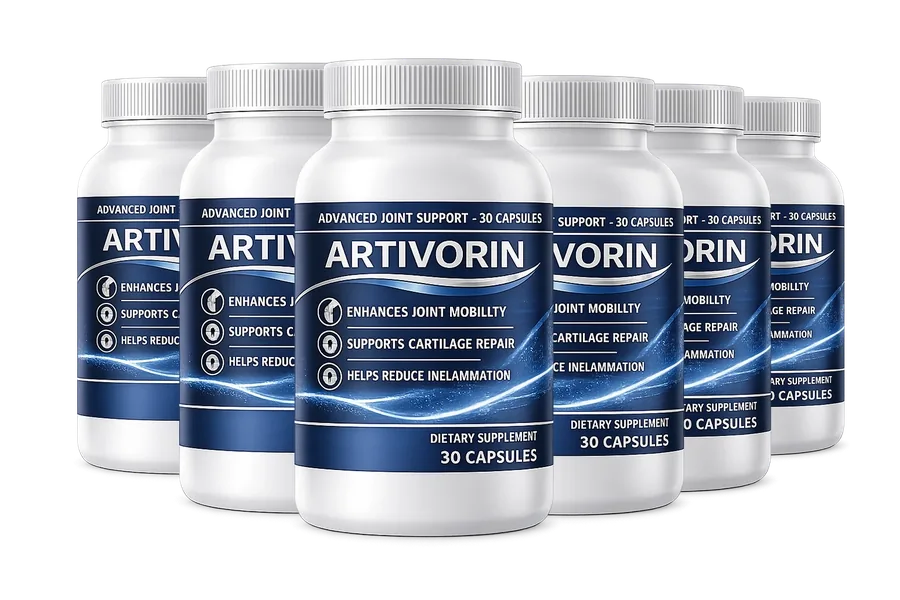
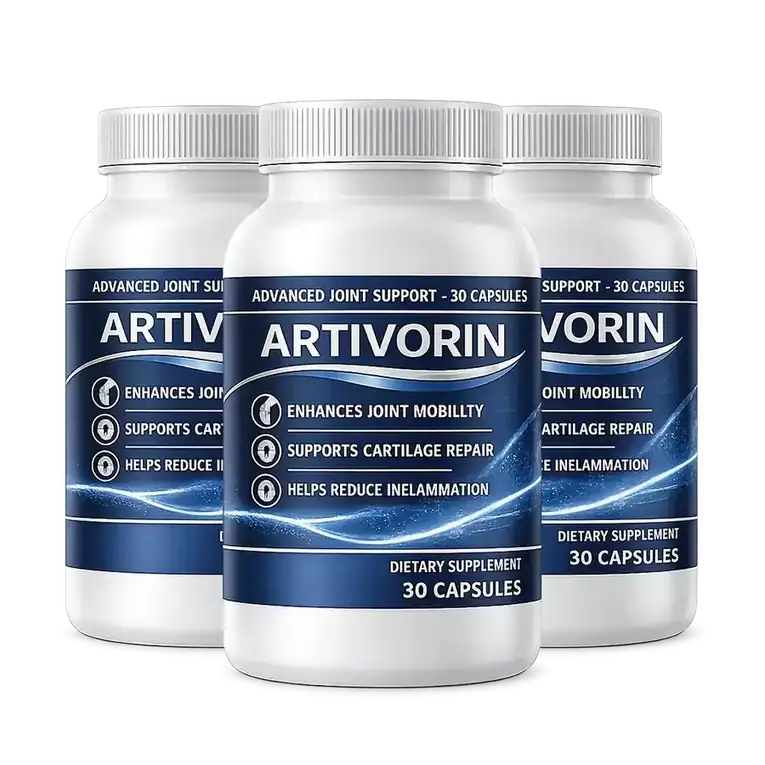
The artwork names the four ingredients in four framed boxes and stops there. There is no serving size line, no percent daily value column, no other-ingredients line and no blend total, and every product photograph in the pack is a front three-quarter view rather than a flat label.
The consequence is specific and it is worth stating once, clearly: the capsule cannot be measured against the research. If the turmeric inside were 1,500 mg the label would look exactly as it does, and if it were a tenth of that the label would look exactly as it does.
What the label does give you is the grade. A 95 per cent curcuminoid extract is a specification, it is the concentration the trials used, and it is more information than a bottle reading simply turmeric root powder would carry.
| Ingredient | Tested on | The dose those trials used | Trials in joints |
|---|---|---|---|
| Turmeric Extract (95% curcuminoids) | Knee osteoarthritis, where it is the only one of the four with a record at all. | 1,500 mg of curcuminoids a day, split into three doses, across six weeks | 30 randomised trials |
| Coenzyme Q10 | Muscle symptoms in people taking a statin, circulating inflammatory markers, and one trial in fibromyalgia pain. | 300–400 mg a day moved inflammatory mediators furthest | 0 randomised trials |
| Butcher’s Broom (Ruscus aculeatus) | Chronic venous insufficiency. Every trial of this plant measures legs, and the endpoint is leg volume. | 150 mg of root extract per capsule, beside hesperidin and vitamin C | 0 records in joints |
| Alpha Lipoic Acid | Diabetic polyneuropathy, in two of the largest supplement trials ever run. | 600 mg a day, for five weeks in SYDNEY 2 and four years in NATHAN 1 | 0 randomised trials |
Counts are live PubMed searches from 18 September 2026, verified for this product by the sister desk at myartivorin.com.
Read it as the yardstick rather than as a verdict. Those are the amounts the published work used, which is a checkable fact; where this capsule sits against them is not knowable from anything the seller publishes. Buyers who want a printed milligram figure before they take anything are better served by a different product, and this desk would rather say so than talk around it.
Why absorption matters more for Artivorin than for most formulas
Curcumin has a well-documented problem: taken by itself it barely reaches the bloodstream. The 1998 pharmacokinetic study gave human volunteers two grams of plain curcumin and found serum levels either undetectable or very low, then added 20 mg of piperine and watched those levels rise sharply.
That is why so many curcumin products name black pepper extract, a phospholipid complex or a micellar formulation on the front of the bottle. It is a competitive feature, and manufacturers who have one say so.
This label names none. That does not prove there is no enhancer in the capsule, but it does mean the question sits alongside the amount question as something the artwork does not answer. It is the single most useful thing to ask the seller if you ring them before buying.
How the four Artivorin ingredients fit together
One lead, three supports
Turmeric extract carries the joint case. The other three are supporting ingredients with records in muscle, vein and nerve research respectively. Formulating that way is common and is not in itself a criticism; presenting all four as joint ingredients would be.
Nothing here is a stimulant
No caffeine, no green tea extract, no synephrine. This is not a formula that will affect sleep, and it does not belong in the same conversation as a thermogenic or a pre-workout.
Three of the four have interactions worth naming
Curcumin with antiplatelet and anticoagulant medicines, coenzyme Q10 with long-term warfarin, alpha lipoic acid with glucose-lowering treatment. The Artivorin side effects page sets each one out with the study behind it.
The grade is the detail people miss
Turmeric extract at 95 per cent curcuminoids is not the same thing as turmeric powder, and the difference is roughly thirty-fold in curcuminoid content. Where a label gives you a specification rather than a dose, the specification is still worth reading.
Who publishes this Artivorin website?
Seventeen sources are cited on this page, each linked inside the paragraph that uses it. Every PubMed record was confirmed against the NCBI summary rather than typed from memory.
- Panahi Y, Rahimnia AR, Sharafi M, et al. Curcuminoid treatment for knee osteoarthritis: a randomized double-blind placebo-controlled trial. Phytother Res. 2014;28(11):1625-31. PMID 24853120. Dose: 1,500 mg/day of curcuminoids in three divided doses for 6 weeks. https://pubmed.ncbi.nlm.nih.gov/24853120/
- Kuptniratsaikul V, Dajpratham P, Taechaarpornkul W, et al. Efficacy and safety of Curcuma domestica extracts compared with ibuprofen in patients with knee osteoarthritis: a multicenter study. Clin Interv Aging. 2014;9:451-8. PMID 24672232. Dose: 1,500 mg/day of Curcuma domestica extract against ibuprofen 1,200 mg/day for 4 weeks. https://pubmed.ncbi.nlm.nih.gov/24672232/
- Kuptniratsaikul V, Thanakhumtorn S, Chinswangwatanakul P, et al. Efficacy and safety of Curcuma domestica extracts in patients with knee osteoarthritis. J Altern Complement Med. 2009;15(8):891-7. PMID 19678780. Dose: 2 g/day of Curcuma domestica extract against ibuprofen 800 mg/day for 6 weeks. https://pubmed.ncbi.nlm.nih.gov/19678780/
- Bideshki MV, Jourabchi-Ghadim N, Radkhah N, et al. The efficacy of curcumin in relieving osteoarthritis: a meta-analysis of meta-analyses. Phytother Res. 2024;38(6):2875-2891. PMID 38576215. https://pubmed.ncbi.nlm.nih.gov/38576215/
- Zhang Y, Gui Y, Adams R, et al. Comparative effectiveness of nutritional supplements in the treatment of knee osteoarthritis: a network meta-analysis. Nutrients. 2025;17(15):2547. PMID 40806131. Thirty-nine randomised trials, 4,599 patients; Boswellia ranked first for pain and stiffness, curcumin among those showing benefit on some outcomes. https://pubmed.ncbi.nlm.nih.gov/40806131/
- Shoba G, Joy D, Joseph T, et al. Influence of piperine on the pharmacokinetics of curcumin in animals and human volunteers. Planta Med. 1998;64(4):353-6. PMID 9619120. After 2 g of curcumin alone, human serum levels were undetectable or very low; 20 mg of piperine alongside it raised them sharply. https://pubmed.ncbi.nlm.nih.gov/9619120/
- Turmeric. National Center for Complementary and Integrative Health, National Institutes of Health. https://www.nccih.nih.gov/health/turmeric
- Hou S, Tian Z, Zhao D, et al. Efficacy and optimal dose of coenzyme Q10 supplementation on inflammation-related biomarkers: a GRADE-assessed systematic review and updated meta-analysis of randomized controlled trials. Mol Nutr Food Res. 2023;67(13):e2200800. PMID 37118903. Dose: 300-400 mg/day showed the strongest effect on inflammatory mediators. https://pubmed.ncbi.nlm.nih.gov/37118903/
- Qu H, Guo M, Chai H, et al. Effects of coenzyme Q10 on statin-induced myopathy: an updated meta-analysis of randomized controlled trials. J Am Heart Assoc. 2018;7(19):e009835. PMID 30371340. https://pubmed.ncbi.nlm.nih.gov/30371340/
- Sawaddiruk P, Apaijai N, Paiboonworachat S, et al. Coenzyme Q10 supplementation alleviates pain in pregabalin-treated fibromyalgia patients via reducing brain activity and mitochondrial dysfunction. Free Radic Res. 2019;53(8):901-909. PMID 31387429. https://pubmed.ncbi.nlm.nih.gov/31387429/
- Coenzyme Q10. National Center for Complementary and Integrative Health, National Institutes of Health. https://www.nccih.nih.gov/health/coenzyme-q10
- Vanscheidt W, Jost V, Wolna P, et al. Efficacy and safety of a Butcher's broom preparation (Ruscus aculeatus L. extract) compared to placebo in patients suffering from chronic venous insufficiency. Arzneimittelforschung. 2002;52(4):243-50. PMID 12040966. Twelve weeks; the endpoint was leg volume, not joint pain. https://pubmed.ncbi.nlm.nih.gov/12040966/
- Boyle P, Diehm C, Robertson C. Meta-analysis of clinical trials of Cyclo 3 Fort in the treatment of chronic venous insufficiency. Int Angiol. 2003;22(3):250-62. PMID 14612852. Dose: capsules of 150 mg Ruscus aculeatus root extract with 150 mg hesperidin methyl chalcone and 100 mg ascorbic acid. https://pubmed.ncbi.nlm.nih.gov/14612852/
- Pacula W, Sowa I, Feldo M, et al. Current insights into the phytochemistry and pharmacological properties of Ruscus aculeatus. Molecules. 2025;30(22):4417. PMID 41302473. https://pubmed.ncbi.nlm.nih.gov/41302473/
- Ziegler D, Ametov A, Barinov A, et al. Oral treatment with alpha-lipoic acid improves symptomatic diabetic polyneuropathy: the SYDNEY 2 trial. Diabetes Care. 2006;29(11):2365-70. PMID 17065669. Doses: 600, 1,200 and 1,800 mg once daily for 5 weeks; the authors concluded 600 mg gave the best risk-to-benefit ratio. https://pubmed.ncbi.nlm.nih.gov/17065669/
- Ziegler D, Low PA, Litchy WJ, et al. Efficacy and safety of antioxidant treatment with alpha-lipoic acid over 4 years in diabetic polyneuropathy: the NATHAN 1 trial. Diabetes Care. 2011;34(9):2054-60. PMID 21775755. Dose: 600 mg once daily for four years in 460 patients. https://pubmed.ncbi.nlm.nih.gov/21775755/
- Vajdi M, Mahmoudi-Nezhad M, Farhangi MA. An updated systematic review and dose-response meta-analysis of the randomized controlled trials on the effects of alpha-lipoic acid supplementation on inflammatory biomarkers. Int J Vitam Nutr Res. 2023;93(2):164-177. PMID 33827267. https://pubmed.ncbi.nlm.nih.gov/33827267/
Artivorin ingredients: common questions
How many ingredients does Artivorin contain?
Four are named: turmeric extract at 95 per cent curcuminoids, coenzyme Q10, butcher’s broom and alpha lipoic acid. Whether anything else is in the capsule shell or used as a filler is not published, because there is no other-ingredients line in the artwork.
Which Artivorin ingredient has the most research behind it in joints?
Turmeric extract, and it is not close. Curcumin has thirty randomised controlled trials in knee osteoarthritis. The other three have none between them, which is why this page gives each of them its own indication rather than lumping all four together as joint ingredients.
Does Artivorin contain black pepper or piperine?
Not according to the artwork, which names four ingredients and no absorption enhancer. That is worth knowing because curcumin on its own is absorbed badly, and the classic pharmacokinetic study found serum levels rose sharply only once piperine was added alongside it.
Is there glucosamine or chondroitin in Artivorin?
No. Neither appears on the label. This is a turmeric-led formula rather than one built on the category’s two traditional ingredients, which is a real difference if you have taken a glucosamine product before and are comparing.
Buy Artivorin on the pack that lets you judge the formula fairly
Two bottles is sixty capsules against a sixty-day window, which is the only rung where the supply and the decision are the same length.
Two bottles $178 · six bottles $294 · 60 days from the date of purchase
Order Artivorin On The Official WebsiteLot ART-26/GO-8345 · one a day · 30 in every bottle