Artivorin Official Website › Choosing A Formula
Choosing A FormulaChoosing A Joint Supplement: Eight Questions, And One Product Scored
Eight questions you can put to any bottle in this category, and a score for each one against the product this desk sells. It answers five of the eight well, one partially and two badly. Publishing the two is the only thing that makes the five worth reading, and the checklist is written to be taken to a competitor.
A checklist a seller passes eight times out of eight is a sales page with a table in it. This one is not that.
The eight questions, in order of how much they matter
Does the label print an amount for each ingredient?
The most important question in the category, because without it nothing can be compared with anything. A named ingredient at an unknown amount is a name rather than a dose.
Does the lead ingredient have evidence in joints?
Not evidence in general. Evidence in the thing you are buying it for. A label can be entirely truthful about an ingredient’s research record while that record is about something else.
Is there anything to help absorption?
For a curcumin product this changes what a given amount is worth. Any label that has one says so in a word.
How long is the money-back window, and when does it start?
This category works over four to six weeks or not at all. A thirty-day window is decorative, and a window starting at purchase is shorter in practice than one starting at despatch.
Can you identify the batch before you buy?
A published lot code and a certificate reference let you check the bottle against the website. Neither proves what is inside, and both prove where it came from.
Is there a person to ring?
A telephone number and a street address are cheap to publish and expensive to fake, which is exactly why so few listings carry them.
Are the low review scores still visible?
A review column with no one-star entries has been filtered. The filter tells you more about the seller than the average does about the product.
Does the seller say what the label leaves out?
Every label leaves something out. A seller who never mentions a gap either has not looked or has decided not to tell you.
The same eight questions, scored against this product
| Question | How this product answers | Score |
|---|---|---|
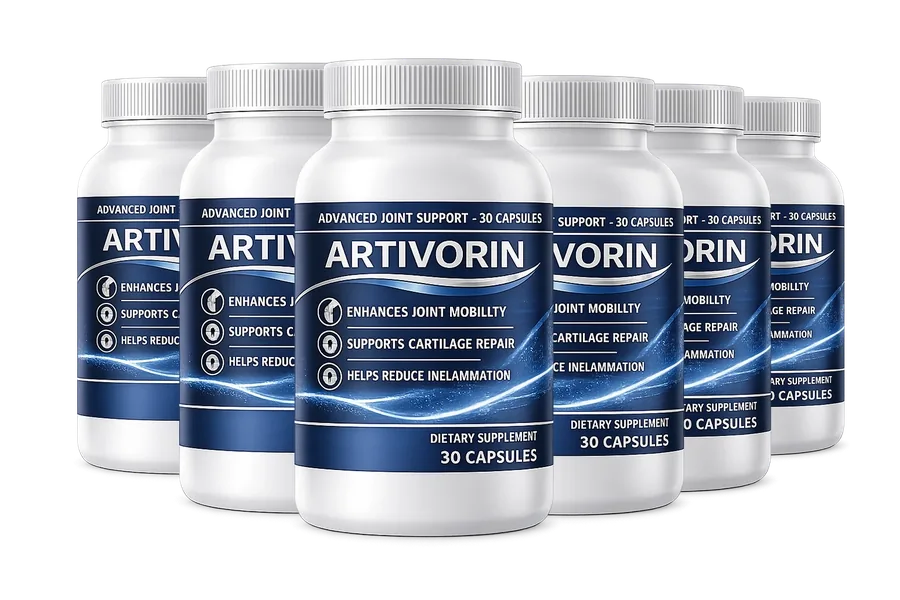
| Amounts printed for each ingredient | No. The artwork names four ingredients in four boxes and prints no milligram figure, no serving size and no percent daily value column | Fails |
| Lead ingredient has joint evidence | Yes. Turmeric extract at 95 per cent curcuminoids, and thirty randomised trials in knee osteoarthritis behind it, including a 367-patient comparison against ibuprofen | Passes |
| Supporting ingredients have joint evidence | No. Butcher’s broom is a vein ingredient, alpha lipoic acid a nerve one, and coenzyme Q10 closest to a pain indication in fibromyalgia | Fails |
| Absorption support named | No enhancer is named, and plain curcumin absorbs poorly | Partial |
| Window length and start date | 60 days, counted from the date of purchase, which is the earlier-starting of the two conventions in this category, so transit comes out of the window | Passes |
| Batch identifiable before purchase | Yes. Lot ART-26/GO-8345 and certificate reference ART-8345-26-GO are published on this website before you buy | Passes |
| A person to ring | Yes. +1 (323) 347-4522 for tracking, changes and refunds, with a New York returns address printed on every page | Passes |
| Low review scores visible | Yes. The star split publishes two per cent at one star and three at two, and the commonest complaint is printed in the reviews page lead | Passes |
Five passes, one partial and two failures. The two failures are the two questions at the top of the list, which is the uncomfortable part and the reason this table exists.
Read honestly, that is a product with one genuinely strong ingredient and a label that will not tell you how much of it there is. Whether that is worth $178 depends entirely on how much weight you put on the first question, and this desk is not in a position to answer that for you.
What it can do is make the decision cheap. Two bottles is sixty capsules against a 60-day window, which is the only rung of the ladder where the supply and the decision are the same length.
How to use this checklist on a bottle that is not this one
The eight questions were written to be portable, and three of them are answerable in under a minute on any product page in the category.
Start with the panel. If a label publishes a Supplement Facts panel with a milligram figure beside each name, you already know more about that product than anybody can know about one that does not, whatever else the two pages say. Write the lead ingredient and its amount on a piece of paper and set it against the trial doses in the joint support guide.
Then look for the blend. A proprietary blend total is the commonest way an amount is hidden in plain sight: eleven names pooled into one figure, which tells you only that no single ingredient can exceed it. A blend total is information, and it is much less information than it looks.
Then find the window and its start date. Thirty days from purchase and sixty days from despatch are not two versions of the same offer; in a category that works over four to six weeks they are the difference between a real trial and a decorative one.
| What you see on a label | What it actually tells you |
|---|---|
| Turmeric Extract 500 mg (95% curcuminoids) | A dose you can compare with the trials. This is the best case |
| Proprietary Joint Blend 640 mg | A ceiling. No single ingredient in the blend exceeds that total |
| Turmeric Extract, CoQ10, Boswellia | Presence, and nothing else. No amount is implied by the order |
| Clinically studied ingredients | That an ingredient has been studied somewhere, at some dose, in some population, none of which is stated |
| Doctor formulated | Nothing checkable. The phrase names nobody and is a seal rather than a credential |
The first row is worth paying more for. The last two are worth nothing at all, and both are extremely common.
Run those three checks on three bottles and the category stops looking interchangeable very quickly. Most of what separates products here is disclosure rather than formulation, and disclosure is the one thing you can assess from outside a laboratory.
Three questions that are not on the list, and why
Some checks sound useful and are not, and it is worth saying which.
How many ingredients does it have. A label naming eleven ingredients is not better than one naming three; it is more likely to be eleven things at amounts nobody has tested. Ingredient count is a marketing number.
Is it made in the United States. A manufacturing location tells you about a factory rather than a formula, and most supply chains in this category cross borders whatever the seal says.
Is it doctor formulated. That phrase is a seal printed on a label and it names nobody, which makes it unverifiable by design. The NIH Office of Dietary Supplements is clear about how much of this category’s assurance rests on the seller’s own word.
Ask the seller how many milligrams of the lead ingredient are in a capsule, and whether anything is used to help absorption. Two questions, one telephone call, and the answer or the absence of one will tell you more than any badge on the bottle.
What to do before spending anything at all
- Read what the rheumatology guideline recommends. It puts exercise and weight management first for hand, hip and knee osteoarthritis, and nothing in this category outranks them.
- Check your own medicine list rather than your age. The interactions in this category are with anticoagulants, insulin and thyroid replacement, and they are a short conversation rather than a reason to avoid everything.
- Know the one rare reaction: alpha lipoic acid can trigger insulin autoimmune syndrome, including in people who have never been diabetic.
- Know the one liver signal: turmeric carries a published ten-case injury series, which is small against very wide use and still worth recognising.
- Read one non-commercial page on supplements before you read a second sales page.
Doing all five takes about twenty minutes and it is the highest-value twenty minutes available anywhere in this decision. It is also the advice least likely to appear on a page trying to sell you something, which is worth noticing about this page as well as about the others.
Who publishes this Artivorin website?
Eleven sources behind the scoring above. Where a row on the table is a failure, the citation supporting that judgement is in the row itself.
- Panahi Y, Rahimnia AR, Sharafi M, et al. Curcuminoid treatment for knee osteoarthritis: a randomized double-blind placebo-controlled trial. Phytother Res. 2014;28(11):1625-31. PMID 24853120. Dose: 1,500 mg/day of curcuminoids in three divided doses for 6 weeks. https://pubmed.ncbi.nlm.nih.gov/24853120/
- Kuptniratsaikul V, Dajpratham P, Taechaarpornkul W, et al. Efficacy and safety of Curcuma domestica extracts compared with ibuprofen in patients with knee osteoarthritis: a multicenter study. Clin Interv Aging. 2014;9:451-8. PMID 24672232. Dose: 1,500 mg/day of Curcuma domestica extract against ibuprofen 1,200 mg/day for 4 weeks. https://pubmed.ncbi.nlm.nih.gov/24672232/
- Shoba G, Joy D, Joseph T, et al. Influence of piperine on the pharmacokinetics of curcumin in animals and human volunteers. Planta Med. 1998;64(4):353-6. PMID 9619120. After 2 g of curcumin alone, human serum levels were undetectable or very low; 20 mg of piperine alongside it raised them sharply. https://pubmed.ncbi.nlm.nih.gov/9619120/
- Halegoua-DeMarzio D, Navarro V, Ahmad J, et al. Liver injury associated with turmeric - a growing problem: ten cases from the Drug-Induced Liver Injury Network [DILIN]. Am J Med. 2023;136(2):200-206. PMID 36252717. https://pubmed.ncbi.nlm.nih.gov/36252717/
- Sawaddiruk P, Apaijai N, Paiboonworachat S, et al. Coenzyme Q10 supplementation alleviates pain in pregabalin-treated fibromyalgia patients via reducing brain activity and mitochondrial dysfunction. Free Radic Res. 2019;53(8):901-909. PMID 31387429. https://pubmed.ncbi.nlm.nih.gov/31387429/
- Boyle P, Diehm C, Robertson C. Meta-analysis of clinical trials of Cyclo 3 Fort in the treatment of chronic venous insufficiency. Int Angiol. 2003;22(3):250-62. PMID 14612852. Dose: capsules of 150 mg Ruscus aculeatus root extract with 150 mg hesperidin methyl chalcone and 100 mg ascorbic acid. https://pubmed.ncbi.nlm.nih.gov/14612852/
- Ziegler D, Ametov A, Barinov A, et al. Oral treatment with alpha-lipoic acid improves symptomatic diabetic polyneuropathy: the SYDNEY 2 trial. Diabetes Care. 2006;29(11):2365-70. PMID 17065669. Doses: 600, 1,200 and 1,800 mg once daily for 5 weeks; the authors concluded 600 mg gave the best risk-to-benefit ratio. https://pubmed.ncbi.nlm.nih.gov/17065669/
- Vallianou NG, Kounatidis DC, Dalamaga M, et al. Alpha-lipoic acid as a trigger of insulin autoimmune syndrome: current evidence, a case-based approach, diagnostic pitfalls, and practical management. Metabol Open. 2026;31:100491. PMID 42662728. https://pubmed.ncbi.nlm.nih.gov/42662728/
- Kolasinski SL, Neogi T, Hochberg MC, et al. 2019 American College of Rheumatology/Arthritis Foundation guideline for the management of osteoarthritis of the hand, hip, and knee. Arthritis Rheumatol. 2020;72(2):220-233. PMID 31908163. https://pubmed.ncbi.nlm.nih.gov/31908163/
- Using Dietary Supplements Wisely. National Center for Complementary and Integrative Health, National Institutes of Health. https://www.nccih.nih.gov/health/using-dietary-supplements-wisely
- Dietary Supplements: What You Need to Know. Office of Dietary Supplements, National Institutes of Health. https://ods.od.nih.gov/factsheets/WYNTK-Consumer/
Two bottles of Artivorin is the cheapest way to answer the question
Sixty capsules against a 60-day window that starts when the parcel ships. If the answer is no, the route back is five steps and one telephone call.
Two bottles $178 · three bottles $216 · six bottles $294 · 60 days from the date of purchase
Order Artivorin On The Official WebsiteLot ART-26/GO-8345 · one a day · 30 in every bottle