Artivorin Official Website › Blog › Alpha Lipoic Acid And Blood Sugar
Alpha Lipoic Acid And A Rare Drop In Blood Sugar
Alpha lipoic acid has one of the longest safety records of any supplement ingredient: four years, 460 patients, 600 mg a day. It also has a rare reaction attached to it that almost nobody buying a joint capsule has ever heard of, and that is worth ten minutes of your time precisely because it is rare.
- Alpha lipoic acid has zero randomised controlled trials in osteoarthritis.
- Its two landmark trials, SYDNEY 2 and NATHAN 1, are in diabetic nerve pain at 600 mg a day.
- It can trigger insulin autoimmune syndrome, in which the body makes antibodies against its own insulin and blood sugar drops unexpectedly.
- A 2026 case report describes this in a patient who was not diabetic.
- It is rare. Knowing the name of it is what turns a frightening afternoon into a useful sentence at an appointment.
What alpha lipoic acid is, and where its evidence comes from
Alpha lipoic acid, also written as thioctic acid, is a compound the body makes in small amounts and which acts as an antioxidant. It has been used as a supplement for decades and as a prescription treatment in some countries, which is unusual for something sold in a capsule on a shelf.
Its research record is serious and it is concentrated in one place. Searched against osteoarthritis it returns twelve papers and no randomised controlled trials. Searched against diabetic polyneuropathy it returns two of the largest and longest supplement trials ever conducted.
That is a strange shape for a label to carry without explanation, and it is the same shape as several other ingredients in this category. The research is real. It is simply about nerves.
The two trials everybody in this field cites
SYDNEY 2 tested 600, 1,200 and 1,800 mg once daily for five weeks in patients with diabetic polyneuropathy. All three doses did something; the authors concluded that 600 mg gave the best balance of benefit against side effects, which is why 600 mg is the number you will see on almost every alpha lipoic acid product.
NATHAN 1 then ran 600 mg a day for four years in 460 patients. Four years is an extraordinary length for a supplement trial, and it is the reason this ingredient has a safety record most botanicals can only gesture at.
A follow-up analysis of that cohort asked which patients improved and which progressed, which is a more useful question than whether the average moved, and is the kind of analysis this category almost never gets.
| Trial | Who was in it | Dose and length | What it measured |
|---|---|---|---|
| SYDNEY 2 | Patients with diabetic polyneuropathy | 600, 1,200 and 1,800 mg once daily for five weeks | Symptoms of nerve pain. The authors concluded 600 mg gave the best balance |
| NATHAN 1 | 460 patients with diabetic polyneuropathy | 600 mg once daily for four years | Progression of the neuropathy over a period almost nothing in supplements matches |
| NATHAN 1 predictor analysis | The same four-year cohort | 600 mg once daily | Which patients improved and which progressed, which is a more useful question |
Three serious pieces of work, one ingredient, and not a joint among them. The endpoint in every row is a nerve.
There is also a dose-response meta-analysis of its effect on inflammatory markers, which is the work most often quoted on supplement pages. As with coenzyme Q10, a marker moving in a blood sample is a different claim from a symptom changing in a person, and the two get run together far more often than they should.
Insulin autoimmune syndrome, explained plainly
This is the part worth reading slowly, and it is short.
Insulin autoimmune syndrome is a condition in which the immune system produces antibodies against the body's own insulin. Those antibodies bind insulin and then release it unpredictably, so blood sugar can fall at times it should not, often a few hours after a meal.
A 2026 review sets out the current evidence, the diagnostic traps and the practical management, and it identifies alpha lipoic acid as a trigger. Certain tissue types are more susceptible than others, which is why it happens to some people and not to the many thousands who take the ingredient uneventfully.
A 2026 case report describes it in a patient who was not diabetic, which is the detail most likely to catch somebody out. The usual mental model is that low blood sugar is a problem for people on insulin or on certain diabetes medicines, and this is a route to it that does not require either.
Because it costs nothing to know and it is unrecognisable if nobody has described it. The likeliest outcome of taking this ingredient is nothing at all, and a page that only prints likely outcomes leaves the one person in a very large number with no idea what is happening to them.
Everything Artivorin names, with the evidence behind each one
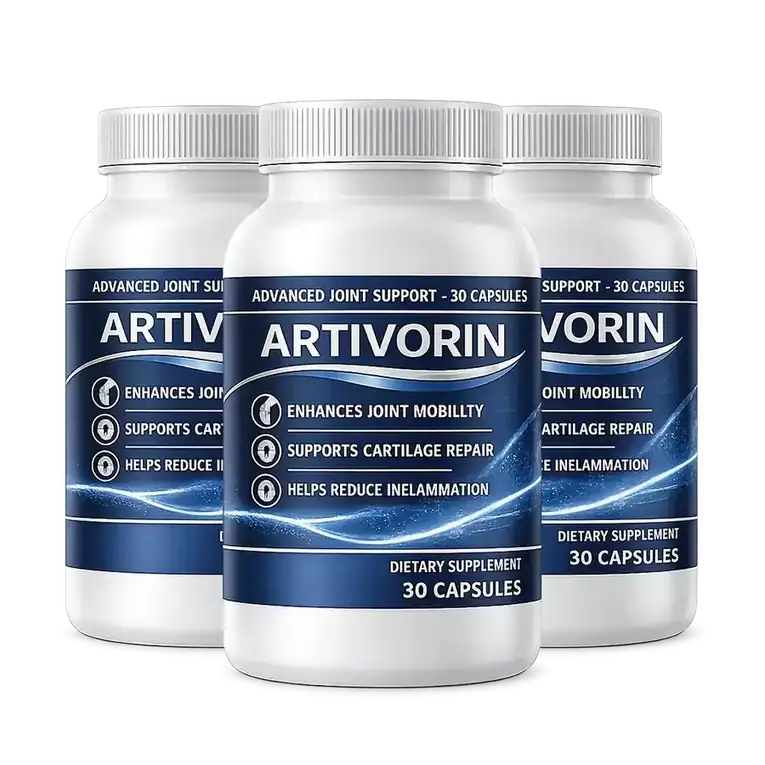
Four ingredients, four different research records, and the dose each one was actually tested at. The Artivorin side effects page sets out every interaction with the study that documents it.
Two bottles $178 · three bottles $216 · six bottles $294 · 60 days from the date of purchase
Order Artivorin On The Official WebsiteLot ART-26/GO-8345 · one a day · 30 in every bottle
What it would feel like, and what to do
A drop in blood sugar has a recognisable shape once somebody has described it, and it is worth being able to name rather than endure.
| What you might notice | When | What it could be | What to do |
|---|---|---|---|
| Shakiness, sweating, sudden hunger | A few hours after eating | Several things, including a drop in blood sugar | Eat something, then write down the time and what you had eaten |
| Confusion or difficulty concentrating | Between meals | The same list, and several others | Do not drive. Eat, and mention it the same week |
| Waking at night feeling clammy and anxious | Overnight | A recognised pattern for a nocturnal drop | Note it. A pattern across three nights is worth reporting |
| Nothing at all | Ever | By far the likeliest outcome | Nothing. This is a rare reaction, not a common one |
The last row is the honest headline. This is included because it is recognisable once described and invisible if nobody has ever described it.
The single most useful action, if any of the first three rows happens to you, is to write down the time, what you had eaten and how long before. A pattern across three occasions is an enormously more useful thing to bring to an appointment than a description of feeling strange.
The second most useful action is to stop the supplement while you work it out. Nothing in a joint capsule is worth persisting with through an unexplained symptom, and a sixty-day window exists precisely so that stopping costs nothing.
Who should have the conversation before starting
- Anyone taking insulin or any other glucose-lowering treatment.
- Anyone who has had an unexplained episode of low blood sugar, whatever the eventual explanation turned out to be.
- Anyone already taking a separate alpha lipoic acid supplement, because two products with one ingredient and one printed amount between them is harder to reason about than either alone.
- Anyone with an autoimmune condition, which is a general point rather than a specific one and is worth a sentence at a review.
For everybody else this is a paragraph to have read and then to forget about. The ingredient is widely used, the four-year trial is reassuring, and the reaction described above is rare enough that a great many people in this field have never met one.
What matters is that it is describable in advance. A safety page that says speak to somebody if you are worried has told a reader nothing; a page that names the syndrome, gives the symptoms and cites the case report has given them something to use.
Holding both halves of this at once
It would be easy to read this piece as a warning and equally easy to read it as reassurance, and neither reading is right on its own.
The reassuring half is genuine. Four years at 600 mg a day in 460 patients is a stronger safety dataset than almost anything else in a supplement capsule, and the ingredient has been in use for decades.
The cautionary half is also genuine, and it is specific rather than vague. A named syndrome, a documented trigger, a case in a person without diabetes, and a symptom pattern anybody can learn in a minute.
Both belong on the same page. A seller printing only the first is selling; a page printing only the second is scaremongering, and both leave a reader worse equipped than they should be.
What to do with an ingredient you cannot measure
One practical difficulty runs through all of this. The trials used 600 mg a day. A label that names alpha lipoic acid without printing an amount cannot be compared with that figure in either direction.
It is reasonable to assume that a once-daily capsule carrying four ingredients holds considerably less than 600 mg of any one of them, because a capsule has a physical capacity and four ingredients at their trial doses would be several grams. That reasoning cuts both ways: it limits what the ingredient can be expected to do, and it also makes the rare reaction less likely than it would be at a research dose.
Neither half of that is a substitute for the number, which is why the checklist on this website puts printed amounts at the top of its eight questions and marks this product down for not having them.
- Find the lead ingredient on any label and its amount.
- Check whether the supporting ingredients have evidence in what you are buying it for.
- Check whether anything on the label has a documented interaction with what you take.
- Check the window, and whether it starts at purchase or at despatch.
- Then decide, and decide inside the window rather than after it.
That sequence works on any bottle in this aisle, including the ones this desk does not sell. The category guide runs through what each common ingredient was actually tested on, and the Artivorin ingredients page does the same for this label.
References
- Vallianou NG, Kounatidis DC, Dalamaga M, et al. Alpha-lipoic acid as a trigger of insulin autoimmune syndrome: current evidence, a case-based approach, diagnostic pitfalls, and practical management. Metabol Open. 2026;31:100491. PMID 42662728. https://pubmed.ncbi.nlm.nih.gov/42662728/
- Salman M, Ashraf H, Alam A. Hypoglycaemia in a non-diabetic patient due to alpha-lipoic acid-induced insulin autoimmune syndrome with HLA-DRB1*04:03:01G. BMJ Case Rep. 2026;19(7). PMID 42493219. https://pubmed.ncbi.nlm.nih.gov/42493219/
- Ziegler D, Ametov A, Barinov A, et al. Oral treatment with alpha-lipoic acid improves symptomatic diabetic polyneuropathy: the SYDNEY 2 trial. Diabetes Care. 2006;29(11):2365-70. PMID 17065669. Doses: 600, 1,200 and 1,800 mg once daily for 5 weeks; the authors concluded 600 mg gave the best risk-to-benefit ratio. https://pubmed.ncbi.nlm.nih.gov/17065669/
- Ziegler D, Low PA, Litchy WJ, et al. Efficacy and safety of antioxidant treatment with alpha-lipoic acid over 4 years in diabetic polyneuropathy: the NATHAN 1 trial. Diabetes Care. 2011;34(9):2054-60. PMID 21775755. Dose: 600 mg once daily for four years in 460 patients. https://pubmed.ncbi.nlm.nih.gov/21775755/
- Ziegler D, Low PA, Freeman R, et al. Predictors of improvement and progression of diabetic polyneuropathy following treatment with alpha-lipoic acid for 4 years in the NATHAN 1 trial. J Diabetes Complications. 2016;30(2):350-6. PMID 26651260. https://pubmed.ncbi.nlm.nih.gov/26651260/
- Vajdi M, Mahmoudi-Nezhad M, Farhangi MA. An updated systematic review and dose-response meta-analysis of the randomized controlled trials on the effects of alpha-lipoic acid supplementation on inflammatory biomarkers. Int J Vitam Nutr Res. 2023;93(2):164-177. PMID 33827267. https://pubmed.ncbi.nlm.nih.gov/33827267/